What Is Market Gardening?
What is market gardening?
Market gardening is a professional model of vegetable and flower production that combines intensive small-scale cultivation, smart system design, and direct marketing to create economically viable farms that regenerate the soil year after year.

The Advantages of Market Gardening
✔ ✔ Makes it possible to earn a living on a modest acerage (around 0.5 hectare)
✔ Improves soil quality year after year
✔ Builds on systems — not improvisation
✔ Integrates business, ecology, and community
Market gardening is not just a growing technique. It is a structured small-scale farm system.
Who Is Market Gardening For?
International Inspiration
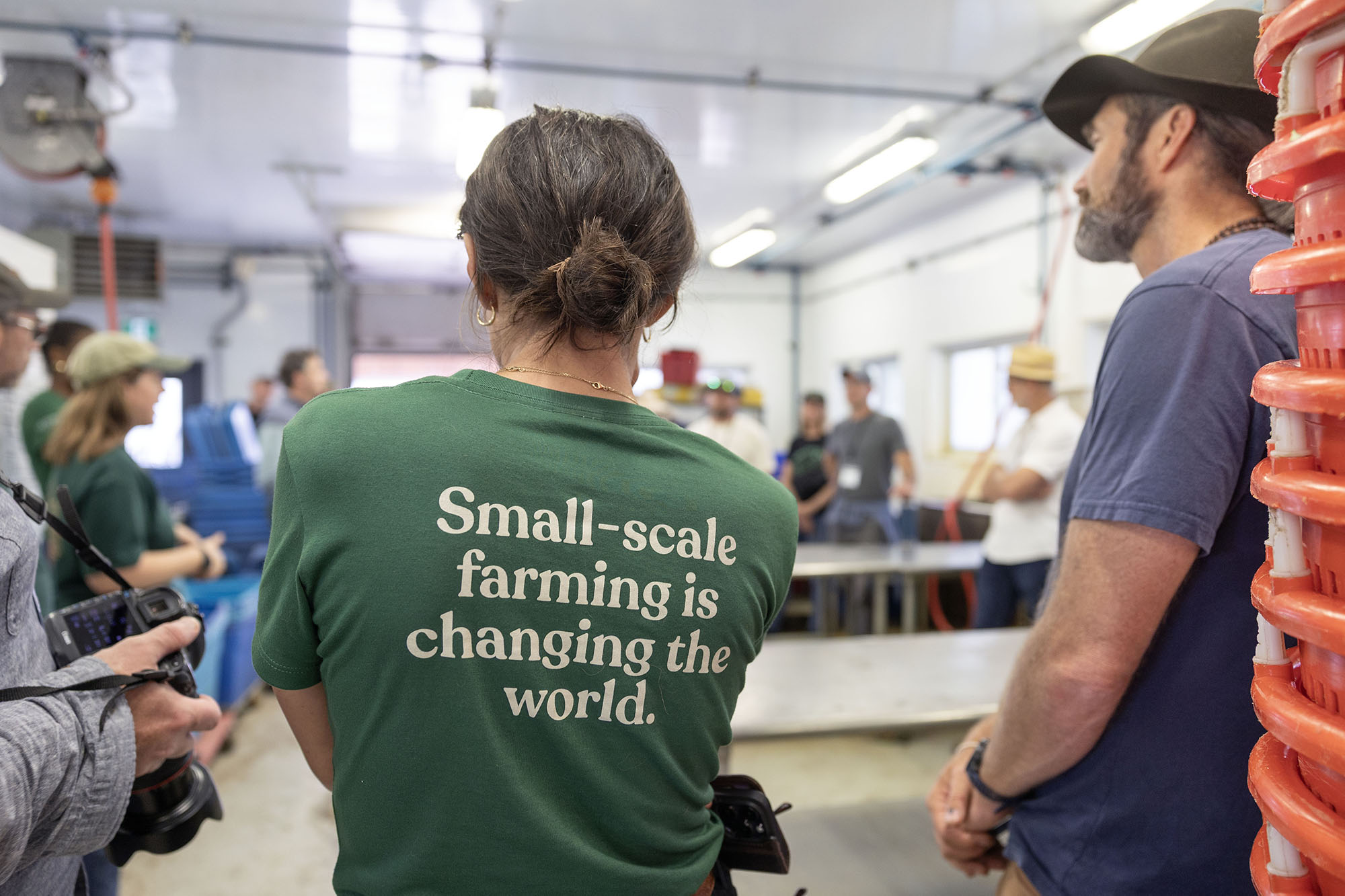
International examples are essential for the growth of the market gardening movement in the Czech Republic. Farms such as La Grelinette in Canada, Neversink Farm in the USA, or Ten Mothers Farm demonstrate that even on a small acreage, it is possible to build a professional, economically viable, and ecologically responsible farm.
These farms combine precise planning, bio-intensive growing methods, direct marketing, and rigorous data tracking. Their experience proves that a small farm does not have to be a hobby project — it can become a stable livelihood and an inspiration for the next generation of growers. Essential Market Gardening Literature
Essential Market Gardening Literature:
- The Market Gardener – Jean-Martin Fortier
- The New Organic Grower – Eliot Coleman
- Regenerative Agriculture – Richard Perkins
Market gardening videos
Core Principles of Market Gardening
1. The Difference Is Not in Soil Philosophy — It’s in Work Discipline
The success of Jean-Martin Fortier, Eliot Coleman, Richard Perkins, and other leading growers is not based solely on ecological values, philosophy, or a “correct relationship with the soil.”
The real difference lies in how extraordinarily organized and systematic they are in their daily work.
They do not improvise.
They do not reinvent decisions every day.
They do not rely on intuition alone.
They build farms on systems.
2. A Small Farm Only Works When It Functions as a System
On a small acreage, there is no room for chaos. Every mistake shows up immediately:
Lost time
Overworked people
Declining quality
Lost revenue
Fortier’s approach is not about “doing more.” It is about:
Precise planning
Repeatable workflows
Clear organization of the day, week, and season
Eliminating unnecessary decisions
A small farm must function like a well-designed machine — not like permanent crisis management.
3. Systemization = Efficiency
What appears from the outside as ease and calm is actually the result of:
Hundreds of decisions made in advance
Clearly defined procedures
Discipline in the details
Efficiency does not come from speed.
It comes from order.
When everyone knows:
What to do
When to do it
How to do it
The goal is a farm that operates without constant pressure, stress, and burnout.
4. Efficiency = Profitability
Profitability on small farms is not a matter of subsidies or luck.
It is a direct consequence of:
Well-organized labor
Smart crop selection
High intensity on small acreage
Direct relationships with customers
The market gardening model shows that a small farm can be profitable precisely because it is small — if it is managed systematically.
5. Landscape and Community Follow — And That’s Why They Thrive
Healthy landscapes and strong communities are not an added bonus.
They are the by-product of a well-functioning farm.
When a farm is:
Economically stable
Organizationally sound
Sustainable over the long termIt has the capacity to:
Care for the soil
Stay rooted in its region
Create jobs
Become a real part of the community
The difference between an average farm and an exceptional one is not ideology — it is the level of organization.
Efficiency does not come from speed, but from order.
A small farm does not succeed despite its size — but because of it, if it has a system.
Profitability is the result of organization, not the primary goal.
Landscape and community thrive where farms are economically strong and built to last.